



An AI-ready Atlassian instance is one where the data is five things – tidy, current, governed, accountable and legible – because an AI agent is only ever as trustworthy as the instance it reads from. If you’re a Teamwork Collection customer and your Confluence and Jira are cluttered, out of date or unclassified, an agent, Rovo, Claude or otherwise, won’t fix that for you. It will inherit the mess, act on it at speed, and hand it back to your team as if it were the truth.
That’s an uncomfortable shift, but one that will make the difference between benefiting from AI and falling victim to it. For years, a messy instance was a productivity tax – annoying, but survivable. Now it’s something else entirely.
Why your Atlassian instance just became your AI strategy
The agentic era has changed the stakes. Rovo can search, synthesise and execute multi-step plans across your tools. And it’s no longer just Rovo: with Atlassian opening up the Teamwork Graph, external agents – including tools like Claude via the Model Context Protocol – can now reach into Confluence and Jira to read your content and act on it.
These agents, though powerful, won’t apply common sense the same way a colleague does. More often than not, they take what they find at face value. Feed them a duplicate workflow, a policy that expired eighteen months ago, or a page full of unclassified personal data, and that’s exactly what shapes their answer. When questionable data goes in, questionable data comes out – except now the output is automated, instant and widespread.
So the question quietly stopped being “how do we adopt AI?” and became “is our instance fit for an agent to act on?” Here’s the five-pillar check we use to answer it – and the solution we’ve built to do the heavy lifting on each.
1. Tidy:
When did your Jira last pass a health check?
Agents inherit your configuration drift. Duplicate custom fields, near-identical workflows, abandoned projects and orphaned labels don’t just slow Jira down – they actively confuse autonomous execution, because the agent can’t tell which of your five “Priority” fields is the one that matters.
Optimizer for Jira is the cleaning service you can outsource at the drop of a hat. It runs a health check across your instance, surfaces duplication and dead projects, merges custom fields and lets you run a bulk Jira clean-up, so the structure an agent reads is the structure you actually intend. A lean, well-ordered instance is one an agent can reason about reliably.
2. Current:
Is your Confluence content under version control?
If an agent pulls an answer from a runbook that was last accurate in 2023, it will tell your team to do the wrong thing, politely and instantly. Freshness isn’t a nice-to-have; it’s the difference between a helpful agent that multiplies your productivity and a confident liar who actively hinders it.
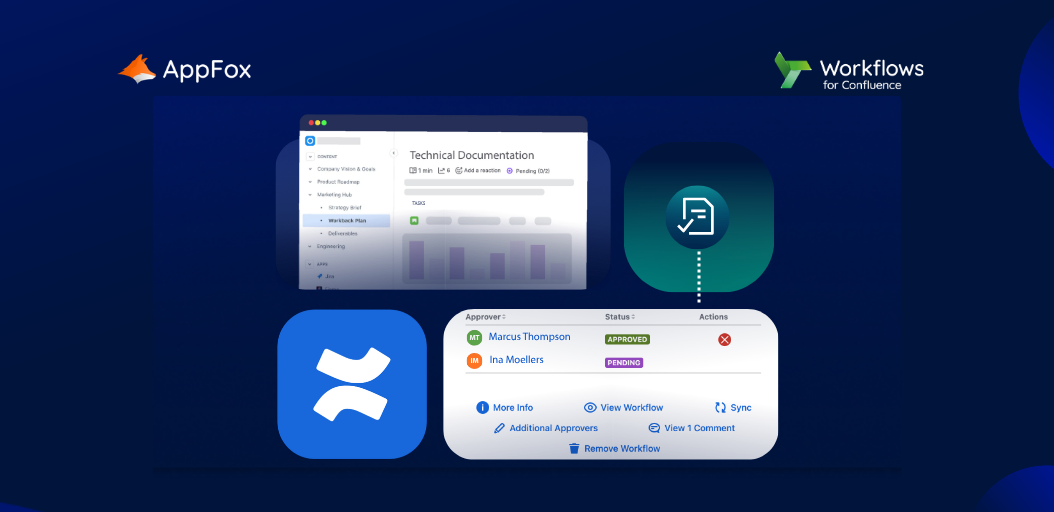
Workflows for Confluence brings document management and lifecycle control to the party: custom approval paths, page statuses, version control and content expiry. Pages move through review, get re-verified, and flag when they go stale – so the only context an agent can reach is content you’ve confirmed is current. Your single source of truth stays singular and, most importantly, true.
3. Governed:
Is your sensitive data classified in Confluence?
This is the one that keeps security teams up at night. Agents operate within the permissions of the person prompting them – so if legacy access controls unknowingly let a junior user reach a sensitive HR page, the agent will happily summarise it for them. Multiply that across thousands of pages nobody has reviewed in years, and you’ve got a quiet, automated data-leak risk.
Compliance for Confluence closes the gap with AI-assisted data classification and detection (DLP): it scans content for sensitive data, classifies it, and gates pages to the right audiences automatically. Better yet, the AI classification controls can be toggled on or off, space per space, at your discretion and replaced with another powerful (albeit more manual) tool letting you enforce classification at the point of publishing, so nothing new slips through unguarded. Agents can only surface what they’re actually allowed to – by design, not by luck.
4. Accountable:
Does your Confluence content run through an approval workflow?
Agents are increasingly creating content, not just reading it. A page drafted in seconds is wonderful – right up until it’s published unreviewed, ingested back into the Teamwork Graph, and cited by the next agent as established fact. Without a sign-off step, misinformed AI-generated content can quite easily masquerade as the truth.
Approvals for Confluence puts a human firmly back in the loop, with on-page approval workflows for whole documents or tailored approval workflows below the page level, adding different approvers for specific sections. What does this mean? It means someone owns the content. Someone signs it off before it goes live. That accountability trail is what turns “the AI wrote it” into “we stand behind it”, and is exactly the control auditors will start asking about.
5. Legible:
Can an agent read your diagrams and screenshots?
Plenty of your most valuable knowledge is locked inside images – architecture diagrams, annotated screenshots, org charts, wireframes. To an agent, that’s dark data: invisible, unsearchable, contributing nothing to the answer.
Captionizer for Confluence uses AI to scan imagery, and auto-generate captions and alt-text for visual content, turning silent images into descriptive, indexable context. It’s a quiet win on two fronts: your instance becomes more accessible to every team member and more legible to every agent reading it.
The pillars only work as a set
Here’s the part that matters for anyone weighing this up one app at a time: tidy-but-stale still misleads an agent. Governed-but-illegible still hides half your knowledge. Current-but-unaccountable still allows unreviewed content to masquerade as your single source of truth. AI readiness isn’t a single feature you switch on – it’s a property of the whole instance, and the five pillars reinforce each other.
That’s the real reason these our solutions operate best as a package. Individually they each fix a genuine problem. Together they form the trust layer that makes agentic AI actually safe and reliable.
Find out where you stand
Not sure which pillars your instance is strong on and which are quietly exposed? We’ve built a short AI-Ready Instance Scorecard – fifteen questions across the five pillars that give you a maturity score and a tailored set of next steps. It takes a few minutes, and it’ll tell you exactly where to start.